Hardware · retro computer · hardware
Atari THE 800XL: The Same Case Forty-Four Years On, a Different Heart
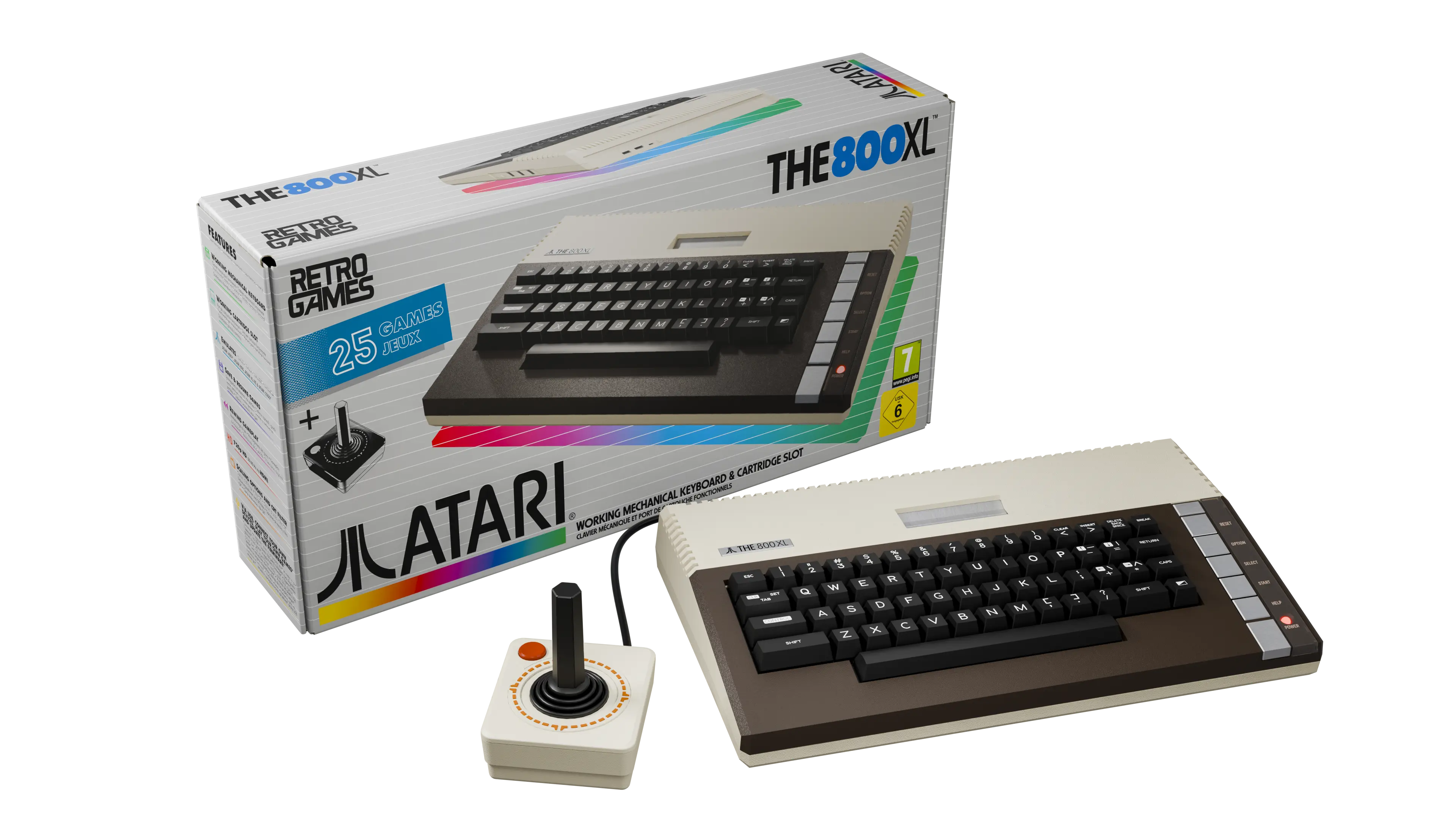
No, the keyboard you see on this page didn't come out of a museum display case. So does anyone need an excuse to sit down at an old keyboard? Some of us do, and the most legitimate one of all comes from the keyboard itself: touch the keys just once and you don't feel like going out, you feel like sitting at home and pottering about with something. The clack of a mechanical key, a cursor blinking on the screen, a half-finished line of code... I'm not writing this as a complaint. If you too are a reader who likes to spend your spare hours in the blue light of a screen, the machine we're going to tell you about this issue is just the one for you.
The subject of this month's file is THE 800XL, which Atari announced on 8 October 2026. Let me be upfront first: the machine isn't on sale yet, we don't have a unit in hand, and there are no owners around to tell us what it's like. This piece rests only on the manufacturer's product page, the press release and the press kit. I'm also giving my verdict by looking at what those documents say and what they don't.
Let's put the verdict up front. On paper, THE 800XL is one of the most honest machines of this kind I've seen so far, because the money went into a real keyboard and a working cartridge slot, not a toy case. But the manufacturer won't say what's beating inside it, and one part is missing from the box. I wouldn't advise you to order until those two gaps are filled.
Who makes it, and for how much?
The name on the machine is Atari's, but the work was done by others. Atari hands out the licence. The design comes from Britain's Retro Games Ltd, who made THEC64 and THE400 Mini before it. Manufacturing and distribution are in the hands of PLAION REPLAI (the press kit lists Retro Games as the developer). So what we're looking at is a full-size remake of the 1983 800XL, but its insides belong to the family of the two earlier machines from the same team.
According to the press release the price is $219.99, £199.99, €219.99 and 349.99 Australian dollars. Pre-orders are open through atari.com, plaionreplai.com and retailers. The release date is 23 April 2027. That date is the same in both the press release and the press kit (Retro Games' own product page gives neither a price nor a date). So if you hand over your money today, you'll get to see the machine six months from now.
The keyboard and the cartridge slot: the serious part
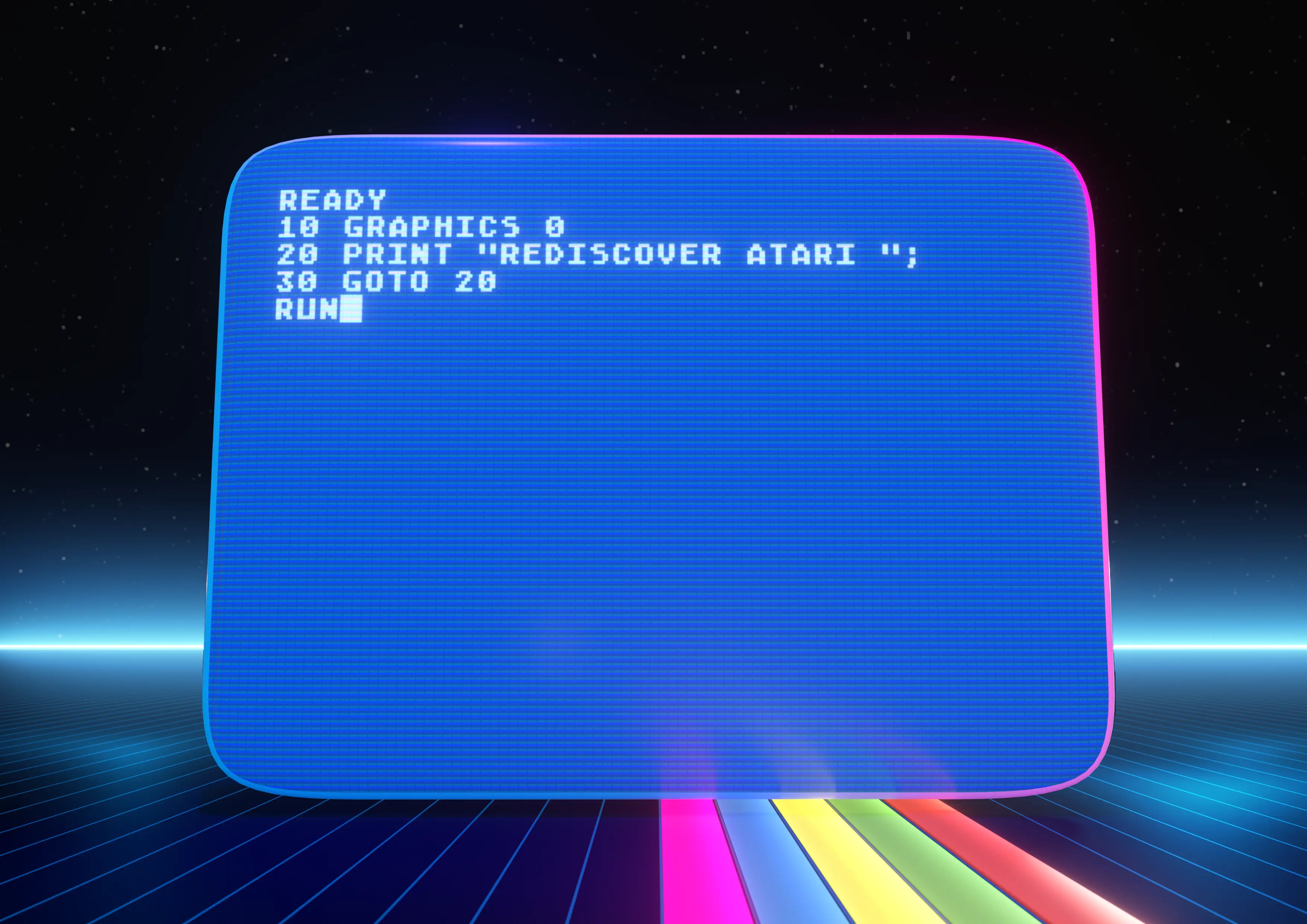
The sin these remakes commit most often is the case that looks just like the original on the outside but does nothing at all when you press the keys. THE 800XL is different. There's a full-size 57-key keyboard with mechanical switches under the keys. Bear in mind that it also has a "Classic Mode" with Atari BASIC sitting there ready, and you'll see this keyboard isn't decoration. The soul of an 8-bit machine lives in that blinking cursor that greets you the moment you switch it on. If you don't have a decent keyboard to talk to it with, the soul is only half there.
The cartridge slot works too. According to the manufacturer's page it takes "most" Atari 400, 800, XL and XE cartridges. So which ones are left out? They don't say. If you're a reader with a drawer full of old cartridges, I'd suggest you wait for that list to be published before you order. The word "most" is no guarantee that your favourite cartridge won't be the very one in the minority.
Picture, ports, and the adapter that isn't in the box
Video comes out over HDMI. You can choose PAL 50 Hz or NTSC 60 Hz. This detail looks small but it isn't: some games of that era were written for 50 Hz for Europe, and at the wrong frequency both the music and the speed go off. A 4:3 ratio and a "pixel-perfect" mode (pixel for pixel, not mangled by scaling) are offered as well. For those who want them, there are also CRT filters (filters that imitate the scanlines of an old tube television).
There are four USB-A ports at the back. These are for plugging in joysticks and reading USB sticks. Power, though, comes in over USB-C. The box has a USB-A to USB-C cable, but no 3-amp power adapter. This needs writing in bold: you'll have to find the adapter yourself, and it has to be one that can deliver 3 A. If you try to start the machine with your phone's old, feeble charger and the screen misbehaves, check the adapter before you blame the cartridge or the software. A part worth a few dollars missing from a $220 box is not, in my view, a saving anyone can defend.
Software: 25 games, plus two hidden ones
25 games come built in. 8 of them are Atari's own, 17 come from other companies. Asteroids, BattleZone, Centipede, Crystal Castles, Missile Command, Millipede and Star Raiders II come from Atari's own kitchen. The outside list has big guns like Boulder Dash, Miner 2049er, M.U.L.E. and The Seven Cities of Gold. Next to them sit lesser-known names like Airball, Berzerk, Elektraglide, Encounter, Henry's House, Hover Bovver and Yoomp! (the full list also includes Basketball, Bristles, Capture the Flag, Flip and Flop, Lee, O'Riley's Mine and Wavy Navy). The press release also mentions two hidden games: Castle Crisis and Super Breakout. These unlock when you plug in an analogue controller. Which analogue controller does the job, the press release doesn't say.
M.U.L.E. being on the list is, for me, a reason all by itself. This economics game, where four people sat at the same screen envying each other's plots of land, was one of the most instructive productions of those years. That must be one of the points of having four USB ports.
The built-in games get four save slots per game (save state, that is, freezing the game exactly as it is at that moment) and up to 30 seconds of rewind. Pay attention: the documents describe these conveniences only for the built-in games. Whether the same is available for files you bring yourself isn't written anywhere.
Your own disk, your own file
Now for the part that pleases me most. The machine can load cartridge, disk and cassette images (an image being a one-to-one file copy of the original medium) from a USB stick. Atari 5200 games included. Nowhere in the documents is there any requirement to open an account, connect to a store or get approval over the internet. You plug in a USB stick and your file stays your file. Considering today's rent-by-the-month (subscription) way of selling software, I don't think I need to explain how valuable that is.
The joystick: THECXSTICK
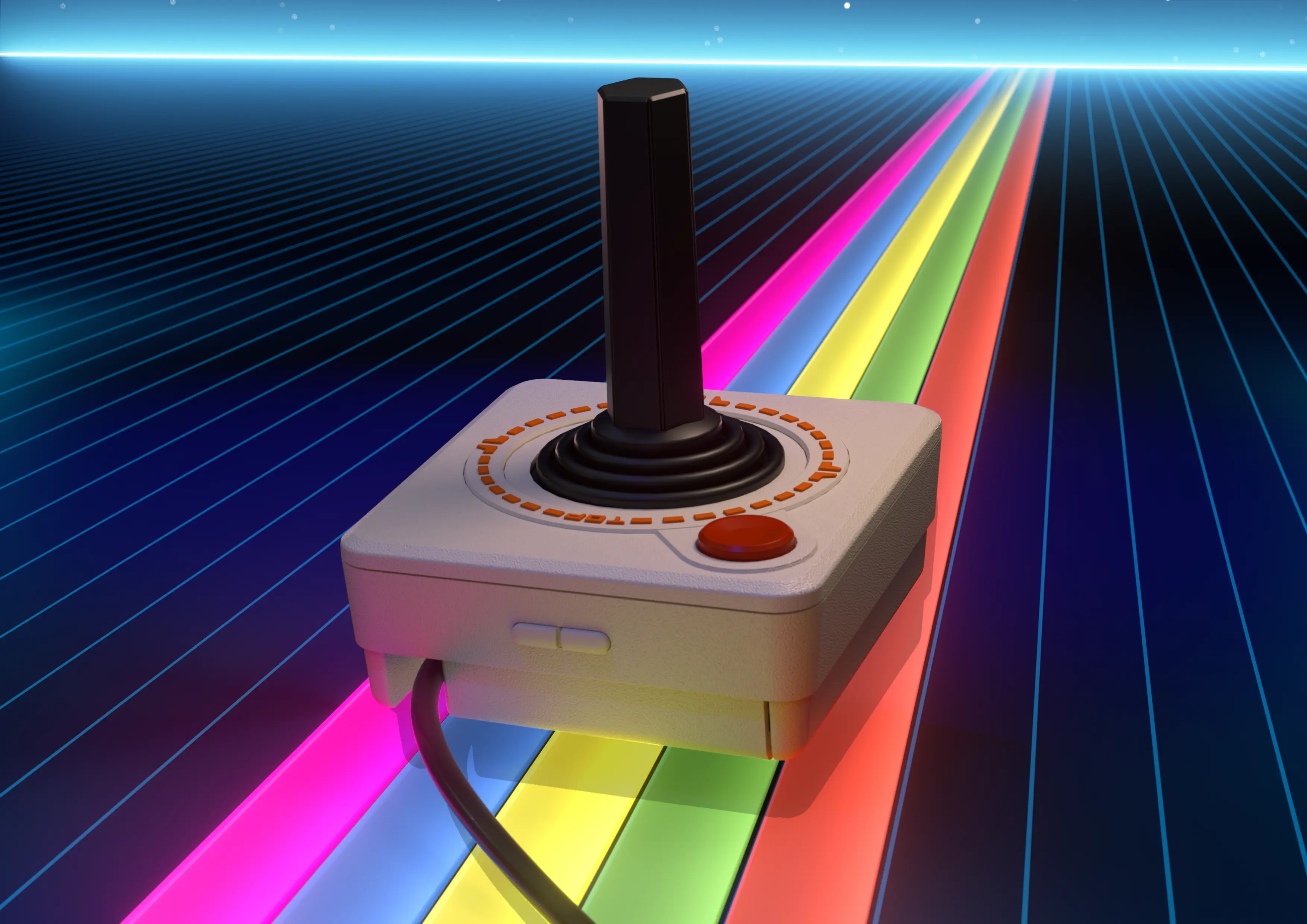
Out of the box comes a USB joystick called THECXSTICK. It's a remake of Atari's classic CX stick. On top of the fire button it carries seven more buttons. It has a self-centring stick and can be set up for right- or left-handed use. Alongside these, the box holds the machine itself, the USB-C power cable, an HDMI cable and a Quick Start Guide. Since we haven't been able to see the guide's contents yet, I can't say anything about it. But a machine that houses a full BASIC making do with a "quick" guide does give me pause.
The patient whose heart we can't see
Now for the biggest gap. Which processor runs inside, or which emulation core turns over on an SoC (system on a chip), has not been disclosed. Notebookcheck noted the same omission. So what we have is a patient whose case, keyboard and ports are known, but whose heart doesn't show up on the X-ray. To make a diagnosis, the patient has to be born first (we'll be waiting in the operating theatre until 23 April). This information matters, because cartridge compatibility, how smoothly your own images will run, and latency (the time between pressing a key and something happening on screen) all depend directly on it.
There's nothing from owners yet either. The machine isn't in anyone's hands. There isn't a single user comment on how the keyboard feels, whether the case runs warm, or which bugs will turn up in the first software release. I'm not going to make these up. Once the first owners start talking after April, this file will have to be opened again.
So what should you do?
My advice to you is this: if all you're after is playing those 25 games, don't rush. You can get to most of them some other way. But if you want to write BASIC on a real keyboard, push the cartridges from your drawer back into a slot, and run your own images without signing in to any account, then on paper THE 800XL is exactly the machine for you. Even so, wait for two things: the list showing which cartridges don't work, and the disclosure of what actually runs inside. Until those arrive, putting $220 down on a pre-order amounts to nothing more than seeing only the outside of a box and guessing at the inside. And be sure to add a 3-amp adapter to your basket, or on the morning of 23 April you'll open the box and be left staring at a machine you can't switch on.
Yes, that's all that's known on paper. Now brew yourself some tea, listen to the rain and wait for April. Once the machine is in its first owners' hands, until we meet again on these pages...
Sources
- Primary source retrogames.biz
- Press kit presse.plaion.com